

02 — EU Textile Digital Product Passport
A Developing Framework for Digital Product Information
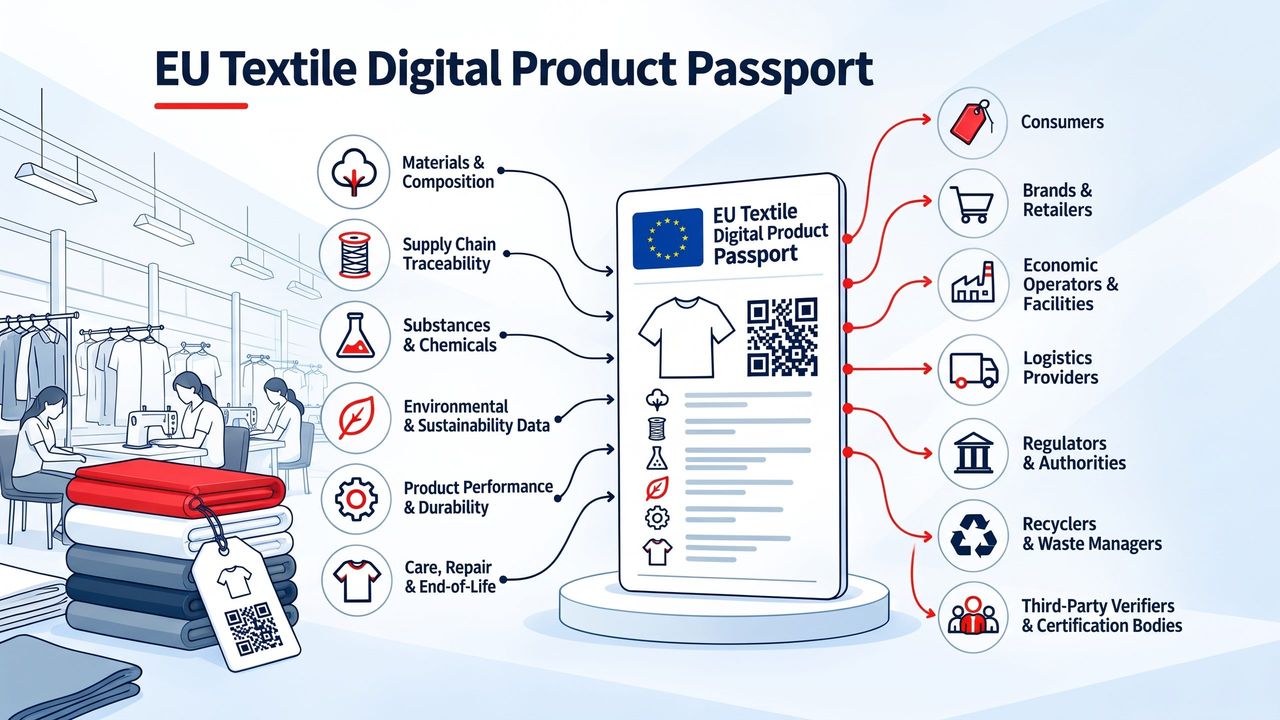
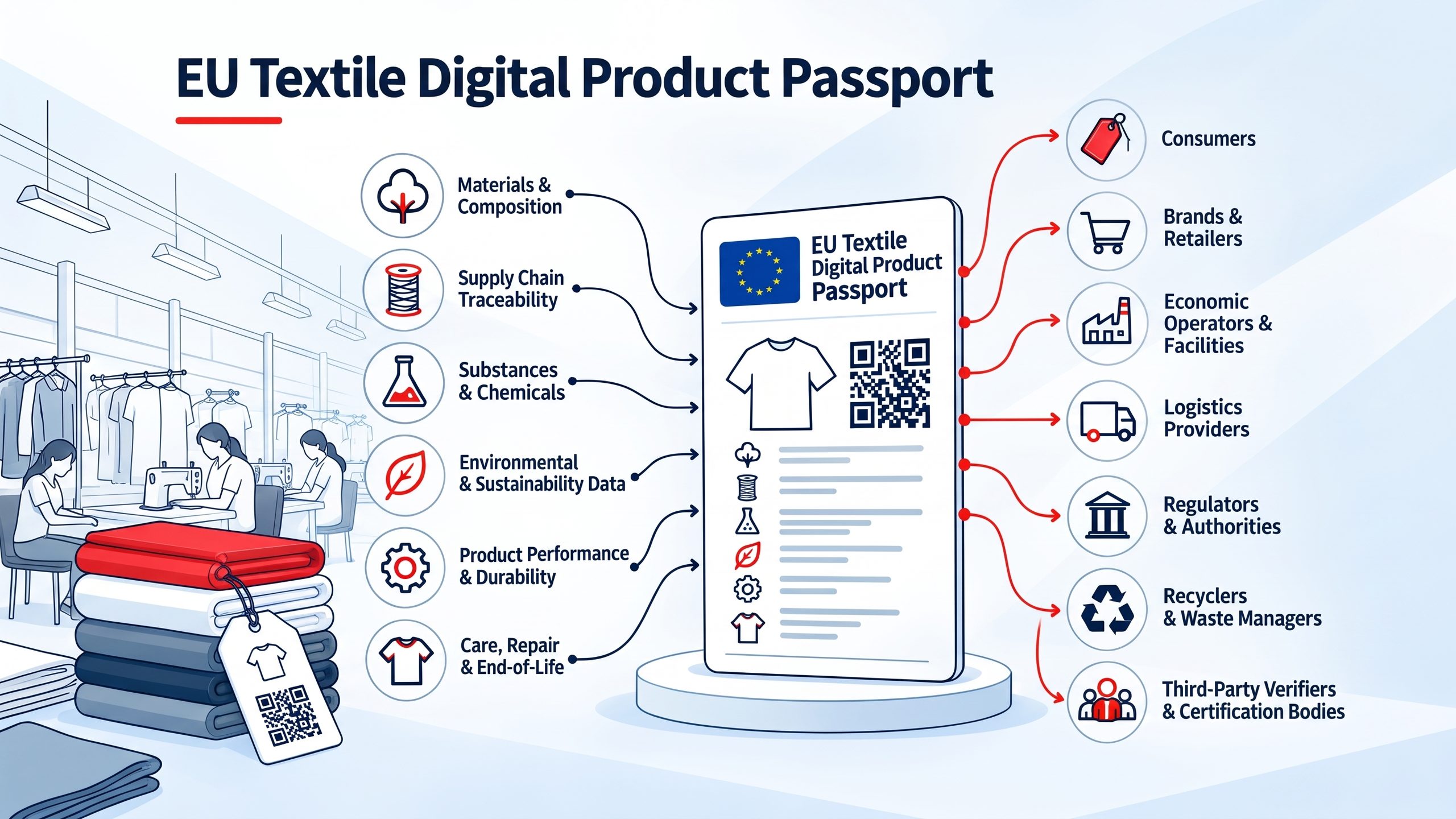
ESPR Regulation (EU) 2024/1781 sets the DPP framework with textiles a priority group — the textile-specific detail is still being written.
Understand the frameworkSlide 3 of 8
A Developing Framework for Digital Product Information
The European Union’s Ecodesign for Sustainable Products Regulation establishes the framework for Digital Product Passports. Textiles are a priority group — but the textile-specific detail is still being written.
What a Digital Product Passport Is Intended to Do
The European Union’s Ecodesign for Sustainable Products Regulation (ESPR), Regulation (EU) 2024/1781, establishes the framework for introducing Digital Product Passports for covered product groups.
A Digital Product Passport is intended to make specified product information digitally accessible to relevant users according to applicable access requirements.
Textiles and apparel are among the priority product groups. However, the detailed textile-specific DPP requirements are still being developed.
The final information fields, technical obligations and implementation dates will depend on the applicable EU rules. That uncertainty is a reason to understand your own information capabilities now — not a reason to wait.

From Framework to Final Obligations
Four things are worth separating: what is established, what is expected, what is still open, and what is already happening commercially.
- Framework
ESPR establishes the DPP framework
Regulation (EU) 2024/1781 creates the legal basis for introducing Digital Product Passports for covered product groups.
- Prioritisation
Textiles named a priority product group
Textiles and apparel are among the priority groups, but the detailed textile-specific requirements are still being developed.
- Detail
Fields, obligations and dates still to be fixed
The final information fields, technical obligations and implementation dates will depend on the applicable EU rules.
- Reality
Buyer expectations move earlier than the law
European buyers may request structured information from manufacturing partners well before obligations are finalised.
Buyer Information Expectations May Develop Before Legal Deadlines
Bangladesh’s textile and apparel manufacturers supply European brands, retailers and other international customers.
While the legal responsibility for a product passport may fall on the relevant economic operator placing a product on the EU market, manufacturers and upstream suppliers hold important product and production information.
European buyers may increasingly request structured, reliable and traceable information from their manufacturing partners.
Factories that understand their existing information capabilities will be better positioned to assess such requests and plan necessary improvements.
Legal responsibility
May sit with the operator placing the product on the EU market.
Information reality
Product and production data sits with manufacturers and upstream suppliers.
Commercial pressure
Buyers request structured information ahead of formal deadlines.
Preparation value
Knowing your capabilities turns a request into a negotiation.
Connecting Information Across the Product Lifecycle
Potentially relevant textile product information areas include the following. These information areas may involve multiple factory departments, upstream suppliers and digital systems.
Product Identification & Specifications
Style, product identity and technical specification records.
Materials, Components & Composition
Fibre, material and component composition information.
Suppliers, Facilities & Supply Chain Traceability
Supplier identity, facility mapping and chain-of-custody records.
Manufacturing & Quality Information
Production, inspection and quality assurance records.
Environmental & Sustainability Information
Environmental performance data and supporting declarations.
Compliance & Supporting Evidence
Certificates, test reports and compliance documentation.
Durability, Care, Repair & Circularity
Product lifespan, care, repairability and circularity information.
Reuse, Recycling & End-of-Life Information
End-of-life handling, reuse and recycling guidance.
Traceability
Traceability helps connect information to the relevant product, materials, facilities and supply-chain activities.
Supporting evidence
Supporting evidence helps establish the reliability of reported information — which is what buyers ultimately test.
Understand What You Can Already Evidence.
A structured readiness assessment shows which of these information areas your factory can locate, check and share today — and which need work first.
Prefer to read the details first?
The ReadyMynd corporate brochure summarises the assessment framework, deliverables and advisory scope in a single document.